
blog detail
August 3, 2026
Telemonitoring
The best remote patient monitoring (RPM) technology doesn’t put the technology in charge of care. It helps clinicians deliver the highest standard of care possible, to more people, more consistently. This lies at the heart of Spritely's approach to RPM.
At Spritely we believe the most effective models of care are clinician-led, patient-centred, data-driven and equity-enabled.
Spritely is co-designed with clinicians. Through co-design with frontline heart failure nurses and other clinical teams, our platform has been shaped around the way care actually needs to be managed for people with chronic disease. The technology supports the nurse-patient relationship rather than trying to replace it.
Spritely gives nurses access to significantly more information about their patients between consultations. Vitals, symptoms and other patient-reported information is collected at home and made available to the clinical team. This provides nurses with a much better picture of how a patient is progressing than would otherwise be available through traditional models of care.
More data is only valuable when it leads to more timely, better decisions. Spritely puts relevant patient information into clinical workflows where nurses can review it, identify changes or areas ofconcern and then engage directly with patients if intervention is needed. Routine clinics also benefit from the Spritely platform summarising patient data and presenting pertinent information as a clinical prep note in advance of scheduled video clinics.
The reslt is a model where clinical judgementand expertise remains at the centre, but clinicians have better information onwhich to act.
The second principle is just as important: when care is designed around the patient and individuals are empowered to proactively manage their condition - engagement increases, and outcomes improve.
Managing heart failure, for example, can involve frequent appointments, rescheduling, travel, time spent waiting in hospital areas, and consultations that rely heavily on a patient’s ability to recall how they have been feeling and what has changed since their last visit.
For patients who are older, frail, working, caring for family or living some distance from their clinical team, these demands can be particularly burdensome. They can make it harder to engage consistently with care and, ultimately, they can become barriers to achieving optimal outcomes.
Spritely moves much of the monitoring including remote consultations to wherever the patient is, even handheld ECG measurements can be done at home by the patient. Patients use a simple device kit to record their health information, and nurses review patient progress remotely. This removes many of the barriers and constraints associated with traditional face-to-face care.
There is no need to find a clinic room for every interaction, and patients don't need to travel for every review. Because remote video consultations can be scheduled more flexibly, there are many more opportunities for patients to connect with their nurse when it works for them.
A courier driver can pull over during a shift and attend their appointment from their van. A teacher can speak with their nurse without having to miss a class. An orchard worker can make it to clinic without booking annual leave.
The result is a much faster cadence of care.
For heart failure patients undergoing medication optimisation, that is particularly important. Rather than waiting weeks for an available appointment to review progress, clinicians get a much more current understanding of what is happening and can engage with the patient in a timely fashion when it is clinically appropriate.
Spritely’s data makes it possible to establish measurable benchmarks for optimal care. With heart failure, clinicians know what good care looks like.Guideline-directed medical therapy (GDMT) should be initiated and optimised appropriately, with patients closely monitored throughout the process.
Once a clear standard of care is established, performance can be measured against it, making it possible to identify where patients or clinical teams might need additional support. For example, clinics should occur weekly where this is appropriate, and titration should be completed within six weeks unless there isa clinical reason to take a slower approach.
Spritely makes it possible to convert best practice into measurable benchmarks that can be monitored and reported across the country, driving actionable insight for better health outcomes. Establishing benchmarks like this make it possible to see where, how often and to what extent variation occurs.
Variance is not necessarily a problem. Patients are individuals, and clinical judgement will always be needed. The value of Spritely is that our data makes variation visible, allowing clinicians to distinguish between appropriate variation and variation that warrants attention.
Because Spritely data is available in real time, it can also be acted on immediately. Clinicians can identify when a patient’s care journey is deviating from the expected pathway and provide targeted support at the point it is needed. The same data can identify where clinical teams may benefit from additional support or where a particular approach is delivering better results.
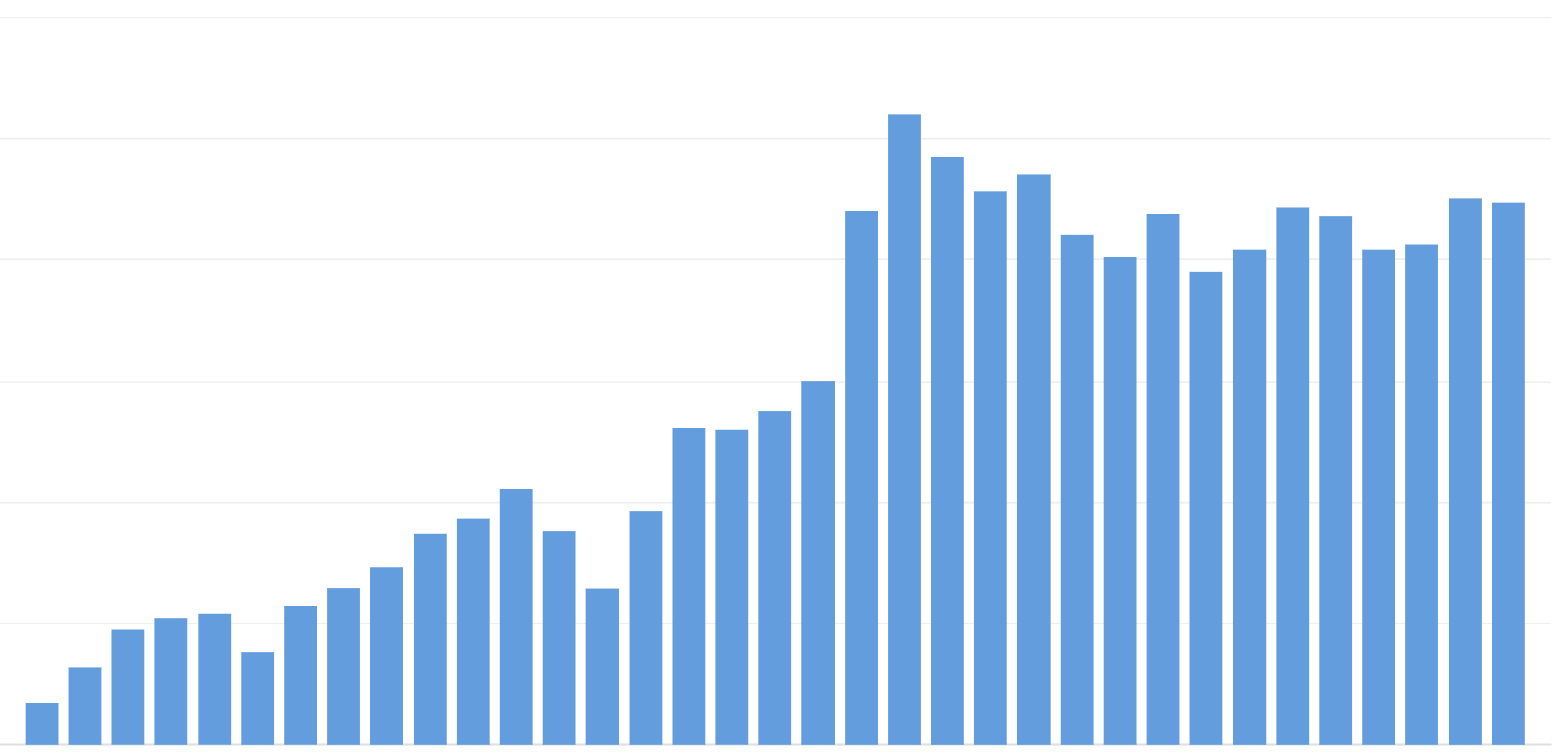
This creates a continuous cycle of measurement, learning and improvement - helping clinicians deliver more consistent, evidence-based care while still allowing the flexibility to respond to the needs of each individual patient.Over time, this has the potential to raise the standard of heart failure care and enable more patients across the country to achieve optimal outcomes. Data shows that patients using Spritely complete titration much faster on average than patients not using Spritely.
Perhaps the most important outcome of this approach is the potential to make optimal care available to more people.
Healthcare capacity is constrained. There are limited numbers of specialist nurses, clinic rooms and appointment slots. Patients also face constraints of their own distance, transport, work, family responsibilities and the practical realities of living with a complex medical condition. Remote monitoring removes some of those constraints.
When nurses can safely manage more of a patient's care remotely, their clinical expertise can reach further. When patients don't need to travel for every interaction, access becomes easier. And when care is supported by a consistent, measurable model, more patients can have the opportunity to receive care aligned with best practice.
That is what we mean by equity-enabled care. It isn't about giving everyone exactly the same experience. It’s about removing unnecessary barriers so that more people have a genuine opportunity to achieve the same optimal outcome.
Spritely's approach has been built around a simple principle: the people delivering care should help design the tools that support it.
By working alongside frontline clinicians, wecan understand what information they need, how workflows operate in the realworld, where patients encounter barriers and what technology needs to do to begenuinely useful.
The result is not technology imposed on aclinical model. It is a clinical model strengthened by technology. For heartfailure, that means combining the expertise of nurses, the engagement ofpatients, the power of data and the accessibility of remote care.
Together, these principles provide more than a better way to monitor patients. They create an opportunity to establish a higher standard of care, one that can be delivered consistently, measured objectively, adapted when necessary and, most importantly, extended to more people who need it.


Christchurch, NZ

info@spritely.co.nz
© 2025 Spritely. All rights reserved

